
July 9, 2026
/
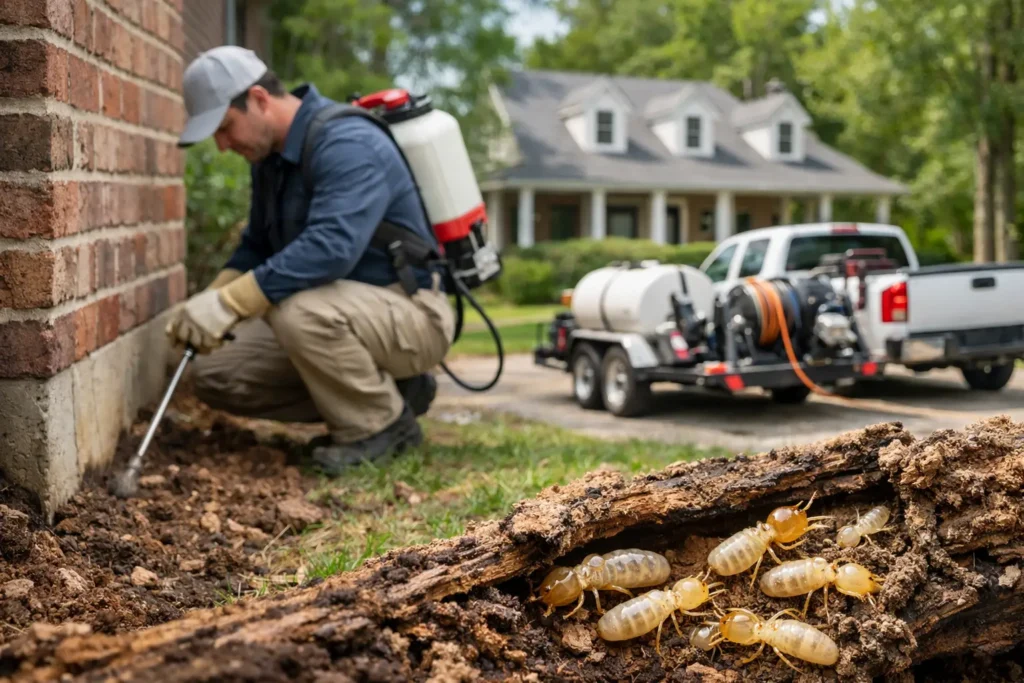
A soft spot in the floor, a line of mud on the foundation, a door that suddenly sticks – those small changes can point to a much bigger problem. When homeowners start looking into subterranean termite treatment North Mississippi properties need, they are usually not dealing with a minor nuisance. They are trying to protect the structure they have worked hard to build, buy, or maintain.
In North Mississippi, termites are not a rare issue. We are in a region where moisture, warm temperatures, and long termite seasons create steady pressure on homes, churches, schools, restaurants, warehouses, and other buildings. Subterranean termites are especially destructive because they work from the ground up, often staying hidden until the damage is already serious.
Why subterranean termites are such a problem here
Subterranean termites live in the soil and build shelter tubes to reach wood and other cellulose materials above ground. That matters in North Mississippi because many properties have the exact conditions termites like – damp soil, crawl spaces, wood-to-ground contact, mulch near the foundation, plumbing moisture, and long stretches of warm weather.
Unlike pests that announce themselves quickly, subterranean termites can stay active behind walls, under flooring, and inside structural members for months or even years. By the time the evidence becomes visible, they may have already spread beyond one isolated area.
That is why treatment is not just about killing what you can see. Effective work has to target the colony, interrupt termite movement, and reduce the chance of future reinfestation. Anything less can leave the real problem in place.
Common signs you may need subterranean termite treatment in North Mississippi
One of the biggest mistakes property owners make is waiting for obvious damage. Termites are hidden by nature, so visible signs usually mean the infestation is already established.
Mud tubes along foundation walls, piers, or crawl space surfaces are one of the clearest warning signs. These narrow tunnels help termites travel while staying moist and protected. You may also notice wood that sounds hollow when tapped, bubbling or uneven paint, sagging trim, loose tile, or pin-sized holes in drywall.
During swarm season, another red flag is flying termites inside or just outside the structure. People often confuse them with flying ants, but a swarm near a building should never be ignored. It can point to an active colony nearby or even inside the structure itself.
Sometimes the first sign is less dramatic. A baseboard may feel soft. A window frame may look slightly blistered. A floor may seem uneven in one area. In termite work, small symptoms can mean significant hidden activity.
What good termite treatment actually involves
The right treatment depends on the structure, the level of activity, the construction type, and the conditions around the building. There is no one-size-fits-all fix, and that is exactly why professional inspection matters.
Inspection comes first
A proper termite treatment plan starts with a detailed inspection. That includes looking at the interior, exterior, foundation, crawl space or slab areas, moisture conditions, and points where termites may be entering. The goal is not only to confirm activity but to understand how and where termites are moving.
For a home, that may mean checking expansion joints, plumbing penetrations, garage edges, and wood near grade level. For a commercial property, the inspection may also need to account for larger footprints, storage conditions, utility access points, and building use.
Soil treatments create a protective barrier
One of the most established approaches for subterranean termite treatment North Mississippi homes and businesses use is a professional liquid termiticide treatment. This process usually involves trenching and, in some cases, drilling around key parts of the structure to place material in the soil where termites travel.
When done correctly, the treatment zone helps stop termites before they can move freely into the building. In many cases, modern nonrepellent materials allow termites to contact the treatment without immediately avoiding it, which helps affect more of the colony.
This method can be very effective, but it has to be applied carefully and according to the structure. A rushed or incomplete job can leave untreated gaps.
Baiting systems can support monitoring and control
Termite bait systems are another option and, in some cases, a strong fit. These systems place monitored stations in the ground around the structure. When termites feed on the bait, the active ingredient is carried back into the colony.
Baiting can be useful for ongoing monitoring and long-term protection, especially on properties where regular oversight is part of the plan. The trade-off is that bait systems are not a set-it-and-forget-it product. They need professional monitoring, maintenance, and timely follow-up.
Wood treatment may be part of the solution
In certain situations, direct treatment of affected wood or void areas may be recommended. That does not replace a full treatment plan for subterranean termites, but it can be a useful part of a broader response when specific activity zones are identified.
Why DIY termite treatment usually falls short
Termites are not like spraying a trail of ants in the kitchen. Store-bought products may kill a few visible insects, but they rarely solve the source of the infestation. With subterranean termites, the colony is usually hidden in the soil or deep inside inaccessible areas.
DIY efforts also tend to miss one of the most important parts of termite control: coverage. If treatment does not fully address the areas where termites are entering and traveling, they simply find another route. That can create a false sense of relief while damage continues behind the scenes.
For most property owners, the smarter move is to get a licensed professional involved early. It saves time, reduces guesswork, and lowers the chance of paying for repairs on top of failed treatment attempts.
Long-term protection matters as much as the initial treatment
A termite problem does not end the day treatment is applied. In North Mississippi, pressure remains year after year. That is why long-term protection should be part of the conversation from the beginning.
Ongoing monitoring, annual inspections, and correction of conducive conditions all make a difference. If a gutter drains too close to the foundation, if a crawl space stays damp, or if wood debris is left near the home, those issues can support renewed termite activity even after a successful treatment.
This is where working with a local provider matters. A company that knows North Mississippi conditions can spot the patterns that out-of-area operators may overlook. Family-owned service also tends to mean something practical – you know who you are calling when you need help, and you expect a response that is personal, not scripted. That is a big reason many local property owners turn to 662 Pest Control when they want experienced termite protection backed by responsive service.
Residential and commercial termite needs are not exactly the same
The basics of termite biology do not change, but treatment priorities can look different depending on the property.
For homeowners, the focus is often protecting structural integrity, avoiding expensive repairs, and keeping the buying or selling process on track. A termite issue can affect not only the condition of the home but also peace of mind.
For commercial properties, there are additional concerns. A restaurant, healthcare facility, school, warehouse, church, or office may need treatment planned around access, operating hours, compliance expectations, and customer or staff traffic. Property managers also need dependable documentation and a clear plan for ongoing protection.
That is why the best termite service is not just technically correct. It is also organized, responsive, and built around how the property is actually used.
When to call for an evaluation
If you have seen mud tubes, swarmers, damaged wood, or unexplained soft spots, it is time to schedule an inspection. If you have never had a termite evaluation on an older property, that is also a good reason to act. Waiting for clearer signs usually benefits the termites, not the owner.
Even if the problem turns out to be old damage or another wood-destroying issue, getting answers early is worth it. Termite work is one of those areas where delay tends to make the repair bill larger, not smaller.
Protecting a home or business in North Mississippi means taking subterranean termites seriously before they get the chance to settle in. A careful inspection, the right treatment method, and a plan for long-term protection can make the difference between a manageable service call and major structural damage. If something about your property does not look right, trust that instinct and have it checked sooner rather than later.