
July 15, 2026
/
A line of ants crossing the kitchen counter can feel like a small problem until it reappears every morning. An ant control service for house is designed to do more than remove the ants you see. It identifies where they are coming from, why they chose your home, and how to stop the colony from sending more workers inside.
For North Mississippi homeowners, ant activity is rarely random. Warm weather, heavy rain, dry spells, pet food, pantry crumbs, leaky plumbing, and easy entry points can all turn a house into a dependable food and moisture source. The right response depends on the ant species, the size of the activity, and whether the colony is indoors, outdoors, or both.
Why Ants Keep Coming Back
Most homeowner sprays are made to kill visible ants quickly. That can offer short-term relief, but worker ants are only a small part of the problem. The colony, including the queen and developing young, is usually hidden in soil, wall voids, mulch, under concrete, or another protected location.
When a product only affects the workers on the trail, other ants may continue foraging or the colony may establish new routes. Some ants can also respond to disturbance by splitting into multiple colonies, making a recurring issue more frustrating. That is why repeated ant activity often calls for more than another can of spray.
Ants follow scent trails, which is why they can seem to appear overnight in the same exact spot. A few crumbs beneath an appliance, a sticky recycling bin, or moisture around a sink can be enough to keep that trail active. Even a clean home can have an ant issue if there is a colony nearby and a small opening around a pipe, door, window, or utility line.
What a Professional Ant Control Service for a House Includes
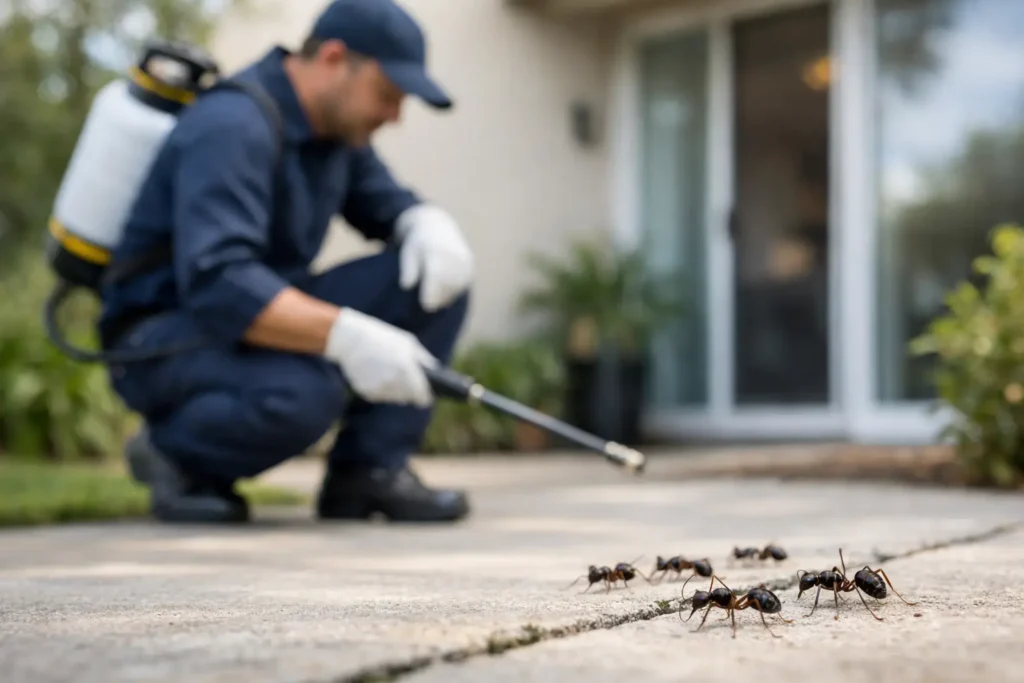
A professional service begins with a careful evaluation, not a one-size-fits-all application. A licensed technician looks for active trails, likely entry points, moisture conditions, nesting areas, and factors around the property that may be attracting ants.
The treatment plan may include targeted products placed where ants travel or nest, exterior perimeter protection, and recommendations for reducing the conditions that support activity. The goal is to reach the colony through a strategy suited to the type of ant involved while limiting unnecessary treatment inside the home.
Timing matters. Baits, for example, are designed to be carried back by foraging ants. They are not meant to provide the instant knockdown of a contact spray. That trade-off can be worthwhile because colony-level control is what helps reduce the cycle of ants returning to the kitchen, bathroom, laundry room, or pantry.
A dependable provider should also explain what they found, what treatment is being used, and what homeowners can expect after service. You should not be left guessing whether a few ants seen the day after treatment means the plan failed. In some cases, temporary activity can occur as ants encounter the treatment and carry it back to the colony.
Signs It Is Time to Call for Help
One ant near an open door does not always require professional service. A recurring trail, however, is different. If you are seeing ants in the same room for several days, finding them around food storage, or treating the issue repeatedly without results, it is time to look beyond surface-level control.
Call for an evaluation when ants are showing up in multiple rooms, appearing after every rain, gathering near plumbing, or moving in and out of cracks along the foundation. It is also wise to act quickly when you notice large numbers of ants around windows, baseboards, electrical outlets, or cabinets.
Carpenter ants deserve particular attention. They do not eat wood like termites, but they can excavate damp or damaged wood to build nesting galleries. Large black ants indoors, especially near moisture-damaged areas, should be inspected so the source of the activity and any contributing moisture problem can be addressed.
Flying ants can also create concern, especially in the Southern Termite Belt. Winged ants and termites are not the same, but they can be difficult to tell apart at a glance. A professional inspection can help determine what you are seeing and whether the situation involves ordinary ant activity or a more serious structural pest concern.
Steps Homeowners Can Take Between Visits
Professional treatment works best when it is paired with practical prevention. You do not need to make your home perfect to reduce ant pressure, but a few consistent habits make a meaningful difference.
Keep food in sealed containers, wipe counters after preparing meals, and avoid leaving pet food out longer than necessary. Empty indoor trash regularly and rinse recyclable containers that may hold sweet residue. These steps remove easy rewards that encourage ants to keep using an indoor trail.
Moisture control matters just as much. Repair dripping faucets, watch for leaks under sinks, and avoid letting water collect around the foundation. Outside, keep mulch and vegetation from resting directly against the house, and make sure gutters and downspouts move water away from the structure.
Sealing gaps around doors, windows, utility penetrations, and pipes can reduce entry points. Still, exclusion is not always enough on its own. Ants can use very small openings, and an active colony may already be established close to the home. Think of sealing as a valuable part of a larger protection plan, not a guaranteed replacement for treatment.
Why Local Experience Makes a Difference
North Mississippi homes face long warm seasons, humidity, changing rainfall, and pest pressure that can shift throughout the year. An ant problem that begins in spring may continue through summer, while periods of drought can push outdoor colonies toward indoor moisture sources.
A local pest management company understands those patterns and can adjust recommendations based on what is happening around your property. The right plan for a single trail near a back door may be different from the right plan for ants in several rooms or carpenter ant activity near a damaged window frame.
At 662 Pest Control, homeowners receive personalized service backed by more than 50 years of termite and pest control experience. Our licensed and certified technicians focus on finding the source of the problem, providing clear answers, and helping protect your home with treatment plans built around real conditions, not guesswork.
Ongoing Protection Helps Prevent the Next Infestation
For homes with frequent pest activity, recurring service can be a practical choice. Instead of waiting until ants establish a trail indoors, ongoing protection allows for monitoring, seasonal treatment, and timely adjustments when conditions change.
This approach is especially helpful for busy families, homes near wooded areas, properties with drainage concerns, or anyone who has dealt with the same ant problem more than once. It also gives you a trusted point of contact when a new pest concern appears, whether it involves ants, spiders, cockroaches, rodents, or stinging insects.
The best time to address an ant problem is before a small trail becomes part of your daily routine. A free pest evaluation can give you a clear picture of what is happening around your home and a straightforward plan for getting your space back.