
August 14, 2026
/
A roach sighting in the kitchen after dark is rarely a random event. When homeowners ask what attracts roaches indoors, the answer is usually a combination of three things: an available food source, dependable moisture, and a protected place to hide. In North Mississippi, warm temperatures and humidity can make those conditions especially easy for cockroaches to find.
One roach does not always mean a major infestation, but it is a reason to look closer. Cockroaches are skilled at staying out of sight, often nesting behind appliances, inside wall voids, under cabinets, and around plumbing. Finding the source early can make the problem much easier to control.
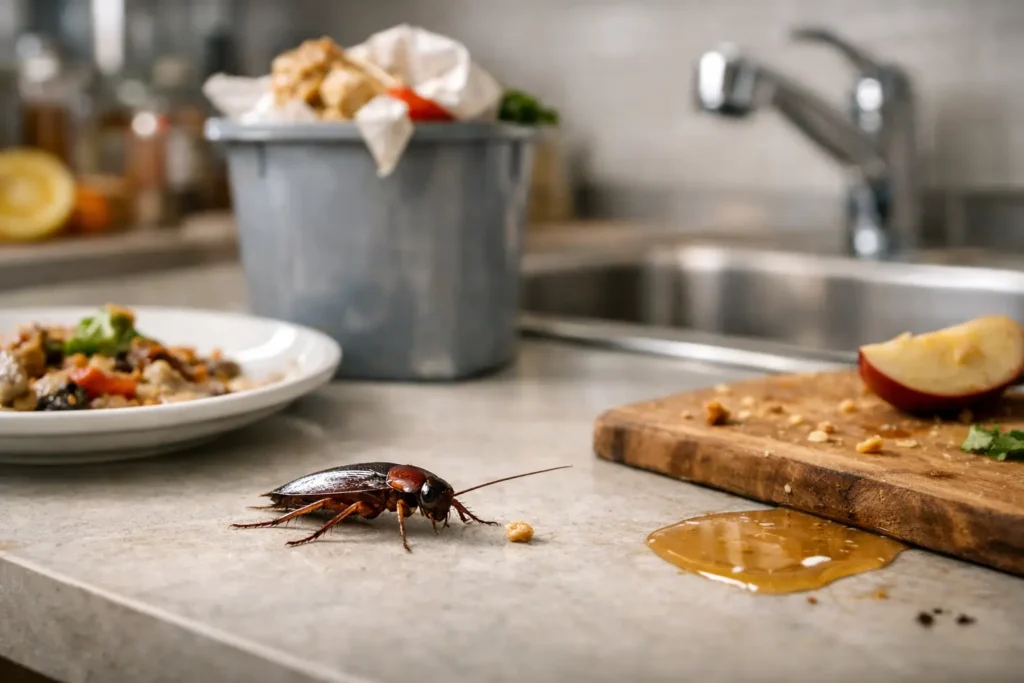
What Attracts Roaches Indoors Most Often
Cockroaches do not need a dirty home to get inside. Clean homes can have roach problems, particularly when pests enter through gaps around pipes, doors, utility lines, or deliveries. Still, the conditions below give them a reason to remain, feed, and reproduce.
Food Crumbs, Grease, and Unsealed Pantry Items
Roaches are opportunistic feeders. They will eat crumbs under a toaster, grease along a stove, pet food left out overnight, and food residue in a garbage can. They can also feed on cardboard, paper, soap residue, and glue when more obvious food is limited.
The small spaces people miss matter most. A few crumbs beneath the refrigerator or a film of grease on the side of an oven can support roaches for longer than most people expect. In commercial kitchens, break rooms, and food storage areas, spills around equipment and floor drains create the same opportunity.
Store dry goods in sealed containers, wipe counters and stovetops after use, and avoid leaving pet food out overnight when possible. Empty indoor trash regularly and clean the inside and outside of the trash can, not just the liner.
Water and Humidity
Moisture is one of the strongest answers to what attracts roaches indoors. Roaches can go longer without food than without water, which is why kitchens, bathrooms, laundry rooms, basements, and utility closets are common trouble spots.
A slow leak beneath a sink may seem minor, but it can provide a dependable water source. Condensation around pipes, a dripping refrigerator water line, wet bath mats, and standing water in appliance drip pans can do the same. In humid areas of North Mississippi, excess indoor moisture can also make wall voids, crawl spaces, and storage areas more appealing.
Repair plumbing leaks promptly and dry wet areas instead of letting them sit. If a room feels damp or has musty odors, managing humidity may be part of the solution. Moisture control helps with more than roaches – it can also reduce conditions that encourage other pests and mold-related concerns.
Warm, Dark Hiding Places
Roaches prefer tight, dark spaces where they can rest without disturbance. The heat produced by refrigerators, dishwashers, ovens, water heaters, and electronic equipment makes nearby gaps especially attractive. German cockroaches, a common indoor species, often gather close to kitchen and bathroom moisture sources.
Clutter gives roaches more hiding places and makes inspections harder. Stacks of paper grocery bags, cardboard boxes in a pantry, items stored under sinks, and crowded utility rooms can all provide cover. Cardboard is particularly inviting because it offers both shelter and a surface roaches can feed on.
This does not mean every stored box will cause an infestation. It does mean that reducing clutter gives roaches fewer protected places to hide and makes early activity easier to spot. Use plastic storage totes when practical, especially in garages, closets, and storage rooms.
Easy Entry Points From Outside or Nearby Units
Some roaches come in from outdoors, while others are carried inside. American cockroaches and smoky brown cockroaches may enter through gaps around doors, windows, plumbing penetrations, attic vents, and crawl space openings. They are also drawn toward mulch, leaf litter, overflowing gutters, and damp areas near the foundation before moving indoors.
In apartments, duplexes, offices, restaurants, and other connected properties, roaches can travel through shared walls, utility openings, and plumbing lines. Treating only one visible room may not solve the full problem when activity is moving from another unit or a shared service area.
Inspect door sweeps, weatherstripping, screens, and gaps where pipes or cables enter the building. Good exclusion is not a substitute for cleaning or treatment, but it removes one of the easiest routes inside.
Packages, Grocery Bags, and Used Items
Roaches can hitchhike into a home or business. Egg cases or small roaches may arrive in cardboard boxes, grocery bags, used appliances, secondhand furniture, or items brought in from an infested location. This is especially common with German cockroaches because they are excellent at living close to people and moving with their belongings.
Check packages and boxes before bringing them deep into the building, then remove cardboard promptly. Be especially cautious with used refrigerators, microwaves, coffee makers, and furniture. Inspect seams, crevices, and the underside of items before bringing them indoors.
Why a Clean Home Can Still Have Roaches
Many people feel embarrassed by a roach problem, but cleanliness is only one part of the picture. A well-kept home can still have a plumbing leak, a gap around a pipe, or roaches brought in through a shipment or guest’s belongings. Outdoor species may also wander in during heavy rain, extreme heat, or changing temperatures.
Cleaning remains valuable because it removes food and makes professional treatment more effective. But if roaches have found a hidden water source or established themselves inside appliances and wall voids, surface cleaning alone may not eliminate them. Roaches reproduce quickly, and their egg cases can make a problem appear to return even after adult roaches become less visible.
Signs Roaches Have Found What They Need
Seeing a live roach at night is the clearest sign, but there are quieter clues. Small dark droppings that resemble ground pepper may appear in drawers, cabinets, or along baseboards. You may notice shed skins, brown egg cases, or a stale, oily odor in areas with heavier activity.
Daytime sightings deserve attention. Because roaches generally avoid light, seeing them during the day can suggest crowding or a more established infestation. That does not confirm the severity on its own, but it is a good reason to schedule an inspection rather than wait.
How to Make Your Property Less Attractive to Roaches
The most effective prevention plan combines sanitation, moisture reduction, exclusion, and monitoring. Start where roaches are most likely to find food and water: under sinks, behind appliances, inside pantries, around trash areas, and near floor drains.
Keep food in sealed containers, clean grease and crumbs from kitchen surfaces, and vacuum or sweep under appliances when accessible. Fix leaks, empty standing water, and do not overlook the refrigerator drip pan or dishwasher connections. Seal noticeable gaps around plumbing and use intact door sweeps to limit access from outside.
For businesses, consistent routines matter. Food-service operations should clean under and behind equipment, maintain floor drains, rotate stored goods, and avoid allowing cardboard to build up in storage areas. Property managers may need to coordinate inspections and exclusion work across units, because roaches do not respect lease lines or suite numbers.
Store-bought sprays may kill the roach you see, but they can miss the nest, egg cases, and hidden travel routes. Improper use can also push roaches deeper into walls or contaminate areas where food is prepared. The right approach depends on the roach species, the level of activity, and where it is occurring.
A trained pest professional can identify likely hiding areas, locate contributing moisture or entry issues, and build a treatment plan that fits the property. For North Mississippi homes and businesses, 662 Pest Control provides straightforward evaluations and dependable pest protection designed to address the source of the problem, not just the roach in plain sight.
If you are seeing roaches repeatedly, especially in kitchens, bathrooms, or daytime hours, act while the activity is still manageable. A careful inspection and a few targeted corrections can restore the clean, protected space your family, customers, and employees deserve.