
September 25, 2026
/
A carpenter ant crossing the kitchen counter is worth paying attention to, but the bigger concern may be hidden behind a wall, beneath damp flooring, or near a roof leak. Knowing how to prevent carpenter ants starts with understanding what draws them in: moisture, accessible wood, protected nesting spaces, and easy routes from the yard to the structure. In North Mississippi, warm weather and frequent humidity can make those conditions common around homes and businesses.
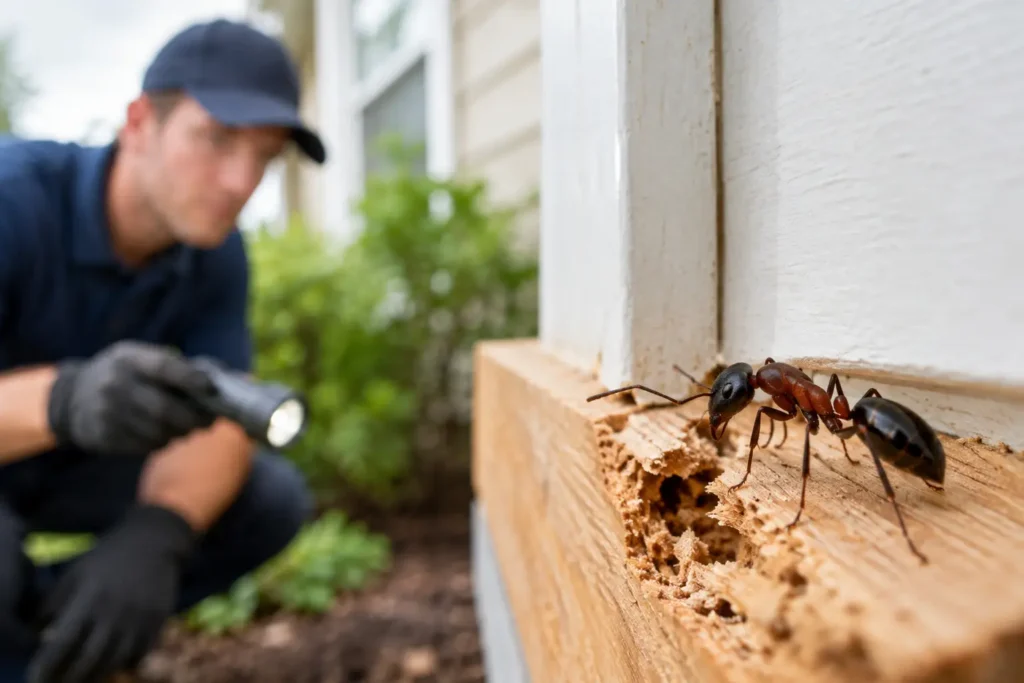
Carpenter ants are large ants, often black or dark reddish-black, that tunnel through wood to create smooth galleries for nesting. They do not eat wood the way termites do, but a persistent colony can weaken already damp or damaged material over time. Prevention is less about one quick treatment and more about keeping your property dry, maintained, and difficult for ants to enter.
How to Prevent Carpenter Ants by Controlling Moisture
Moisture is the first issue to address because carpenter ants are strongly attracted to softened, water-damaged wood. A colony may establish itself in a wall void near a plumbing leak, around a poorly sealed window, under a leaking roofline, or in damp wood near a crawl space. If the moisture remains, simply removing the ants may not keep another colony from returning.
Walk around the home after a heavy rain and look for water where it should not be. Gutters should carry water away from the foundation, downspouts should discharge well beyond the house, and the soil should slope away from the structure rather than toward it. Clogged gutters, overflowing valleys, and standing water beside the foundation deserve prompt attention.
Inside, check under sinks, behind appliances, around tubs and showers, and near water heaters for slow leaks. A small drip can create the kind of damp, protected area carpenter ants prefer. In crawl spaces, poor ventilation and plumbing leaks can leave floor joists and subflooring vulnerable. Dehumidification or improved ventilation may help, but the right solution depends on the source of the moisture.
Roof and attic problems matter, too. Stained ceilings, soft trim, peeling paint, or a musty odor can point to water intrusion. Repairing the leak and replacing severely damaged material protects the structure while taking away a likely nesting site.
Remove Outdoor Routes to the Building
Many carpenter ant problems begin outside. Ants commonly nest in old stumps, decaying landscape timbers, firewood, dead branches, and moist woodpiles. From there, they can travel along tree limbs, utility lines, fences, or dense plants until they find an opening into the building.
Keep shrubs, vines, and low-hanging branches trimmed back from siding and rooflines. This is not only good for carpenter ant prevention. It also helps reduce pathways for other insects and makes routine exterior inspections easier. Avoid piling mulch heavily against exterior walls, especially where siding or wood trim sits close to the ground. Mulch helps retain moisture, so a clear inspection strip around the foundation is often a better choice.
Firewood should be stored off the ground and away from the house, not stacked on a porch or against the garage wall. The same rule applies to old lumber, cardboard, and construction debris. If you have a stump or fallen tree with visible ant activity, removing it can eliminate an outdoor nesting location close to the property.
For commercial properties, pay close attention to loading areas, dumpster pads, landscaping near entrances, and storage areas. Pallets, damp cardboard, and wood debris can give carpenter ants shelter close to the building. Regular grounds maintenance is a practical part of protecting a restaurant, warehouse, office, school, or rental property.
Seal the Openings Carpenter Ants Use
Carpenter ants can enter through surprisingly small gaps, particularly where pipes, cables, and utility lines pass through exterior walls. Inspect the foundation, siding transitions, windows, doors, vents, and roofline for cracks or missing sealant. Replace worn weatherstripping and repair damaged screens, door sweeps, and loose trim.
Sealing alone will not solve an established infestation inside a wall, but it reduces new entry points and makes your prevention efforts more effective. Focus first on openings near areas of moisture or vegetation. For example, a gap around an air-conditioning line beside an overgrown shrub creates both the pathway and the cover ants need.
Wood-to-soil contact also deserves attention. Porch posts, siding, steps, fences, and trim should not remain in constant contact with wet soil or mulch. If wood is already soft, split, or deteriorating, repair it instead of covering it with caulk or paint. The goal is to correct the condition that made the wood attractive in the first place.
Keep Food and Indoor Spaces Less Attractive
Carpenter ants are not drawn to food in the same way as some pantry ants, but they will forage for sweets, proteins, grease, and moisture. Seeing a few foraging ants indoors may mean a nest is nearby, though not necessarily inside the house. Good sanitation limits what foraging ants can find and helps you notice unusual activity sooner.
Wipe counters, clean spills promptly, keep pet food in sealed containers, and avoid leaving dirty dishes overnight. Empty indoor trash regularly, especially during warm months. In break rooms, commercial kitchens, and employee eating areas, a consistent cleaning routine is especially valuable because even small crumbs or drink spills can support repeated ant traffic.
Watch for trails near sinks, dishwashers, windows, and exterior doors. Carpenter ants often become most visible at night, so activity after dark can provide useful clues about where they are entering or foraging. Do not assume that spraying ants you see will reach the nest. It may kill a few workers while leaving the colony and its queen protected elsewhere.
Know the Signs That Prevention Is No Longer Enough
A single carpenter ant outdoors does not always mean there is a problem in the building. Repeated indoor activity, however, calls for a closer look. The same is true if you see large winged ants indoors, particularly in spring or early summer. Winged carpenter ants have a narrow waist, bent antennae, and front wings longer than their back wings. Termite swarmers have a thicker waist, straight antennae, and wings that are more equal in length.
Other warning signs include faint rustling in a wall, small piles of coarse sawdust-like material called frass, damaged or hollow-sounding wood, and activity near known moisture damage. Carpenter ants often push frass from their galleries, and it may contain bits of wood, dead insects, or insulation. Because carpenter ant damage and termite damage can be confused, an accurate inspection matters before choosing a treatment.
A colony may also have satellite nests. That means the ants you find in one area may be connected to a larger parent colony elsewhere outdoors. This is why store-bought sprays and bait products can produce mixed results. The best approach depends on where the nest is located, how large the infestation is, and whether moisture damage or structural repairs are involved.
Protect Your Property With Early Professional Help
When carpenter ants keep returning, appear in several rooms, or emerge from walls or ceilings, it is time to bring in a licensed pest professional. A proper evaluation looks beyond the visible ants to identify likely nesting areas, entry points, moisture conditions, and any wood damage that needs repair. Treatment can then be targeted to the actual problem rather than based on guesswork.
For North Mississippi homeowners and businesses, 662 Pest Control provides free pest evaluations and practical solutions backed by more than 50 years of termite and pest control experience. Fast action can help prevent a small ant issue from becoming a larger repair project.
Your best defense is regular attention to the parts of the property that carpenter ants favor most: wet wood, hidden gaps, overgrown vegetation, and cluttered outdoor storage. Address those conditions early, and you give ants far fewer reasons to make your home or business their next nesting site.