
September 16, 2026
/
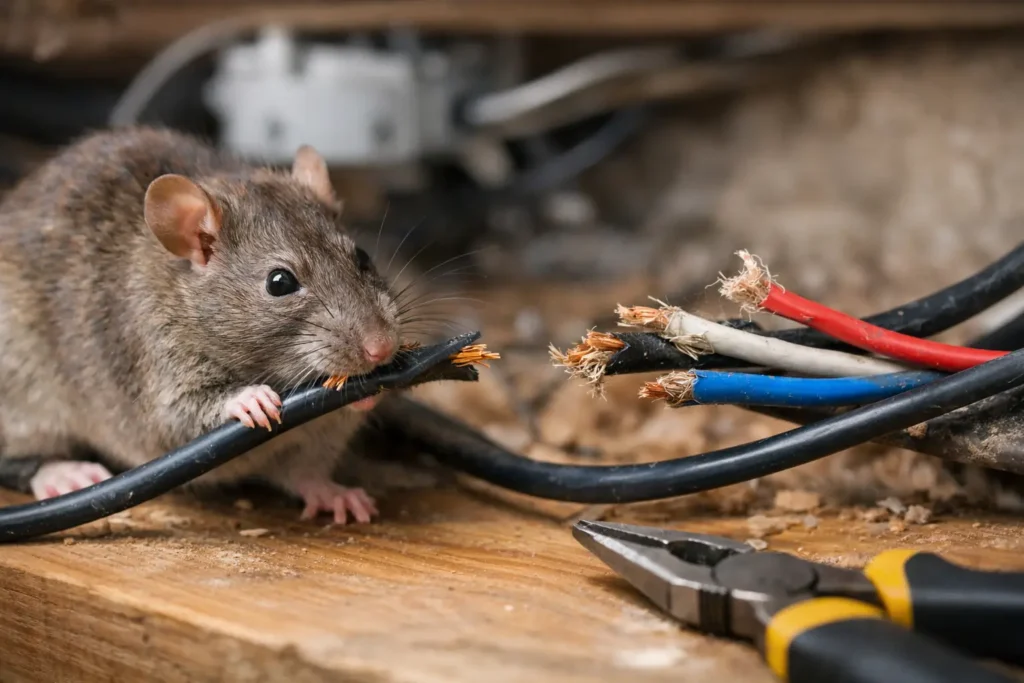
A faint scratching sound above the ceiling may seem like a small nuisance. But if rodents have entered your attic, walls, crawl space, or equipment room, the question quickly becomes: can rodents chew wiring? Yes, they can – and damaged wiring can turn a rodent problem into an electrical and fire safety concern.
Mice, rats, and squirrels have teeth that never stop growing. Chewing is how they wear those teeth down, and electrical wiring can become one of many materials in their path. For North Mississippi homeowners and business operators, early action is the best way to protect the property, avoid costly repairs, and prevent a minor infestation from becoming a serious disruption.
Why rodents chew electrical wiring
Rodents do not chew wiring because they are attracted to electricity. They chew because wire insulation, plastic conduit, rubber, wood, cardboard, and other building materials are easy to gnaw. A warm, quiet attic or wall void also gives them a protected place to nest close to the wiring they may damage.
Mice can fit through openings about the size of a dime, while rats can use gaps around pipes, vents, utility lines, and damaged weather stripping. Once inside, they often travel along walls, above ceilings, behind appliances, and through crawl spaces. Those routes commonly overlap with electrical cables.
The risk depends on the type and extent of activity. One mouse does not always mean severe wire damage, but rodents reproduce quickly. A small issue can grow fast when food, water, shelter, and easy entry points remain available.
What chewed wiring can cause
The plastic insulation around a wire helps keep electricity contained. When rodents strip or nick that insulation, the exposed wiring may short, arc, overheat, or fail. In some cases, damage is obvious right away. In others, it stays hidden inside a wall, attic, or ceiling until an electrical problem appears.
Possible consequences include flickering lights, a tripped breaker, outlets that stop working, damaged appliances, and loss of power to part of a building. More concerning, chewed wires can create a fire hazard, especially where flammable nesting material, insulation, stored boxes, or dry debris is nearby.
For commercial properties, the impact can go beyond repair costs. A rodent-related electrical issue can interrupt refrigeration, security systems, point-of-sale equipment, lighting, communications, or production operations. Restaurants, warehouses, healthcare facilities, schools, churches, and food-related businesses have particular reason to respond quickly when signs of rodents appear.
Signs rodents may be chewing wires
Wiring damage is usually out of sight, so it helps to watch for the broader evidence of rodent activity. A professional inspection can confirm the source of the problem, but these signs deserve attention:
- Scratching, scurrying, or gnawing sounds in walls, ceilings, attics, or under floors, especially after dark
- Droppings in cabinets, utility rooms, pantries, attics, crawl spaces, or near stored materials
- Torn insulation, shredded paper, fabric, or plant material used for nests
- Greasy rub marks along baseboards, pipes, beams, and wall edges
- A musty odor or urine smell in enclosed spaces
- Flickering lights, repeatedly tripped breakers, or outlets and switches that work inconsistently
Do not assume an electrical symptom is simply an aging fixture or overloaded circuit. It may be unrelated to rodents, but any suspected wire damage should be checked by a qualified electrician. Avoid handling exposed wires or opening electrical panels yourself.
Attics and crawl spaces are frequent trouble spots
Attics offer rodents a quiet place to nest, especially when branches touch the roofline or gaps exist around soffits, vents, roof returns, or utility penetrations. Crawl spaces can be just as inviting when moisture, clutter, damaged vents, or unsealed openings provide access.
These areas also hold insulation, plumbing lines, HVAC components, and electrical wiring. Rodents may contaminate insulation with droppings and urine while chewing nearby materials. In more established infestations, removing rodents alone may not be enough. Damaged insulation, nesting material, and entry points may need attention to help restore a clean, protected space.
What to do if you suspect rodent damage
First, treat electrical concerns seriously. If you smell burning, see sparks, notice smoke, or have a breaker that will not stay on, turn off power to the affected area if it is safe to do so and contact an electrician promptly. If there is an immediate fire risk, leave the building and call emergency services.
Next, address the rodent source instead of only repairing what they damaged. Replacing a chewed wire without removing the rodents and sealing entry points can leave the property exposed to the same problem again next week.
A practical response includes inspection, targeted removal or control, exclusion work, and follow-up monitoring. The exact approach depends on whether the pest is a mouse, rat, squirrel, or another animal, how long it has been active, and whether the property is a home or a regulated commercial environment.
For example, a few mice in a garage may call for a focused plan around entry points and food storage. Rodent activity in a restaurant, warehouse, or apartment building often requires broader inspection and ongoing service because there are more hiding places, more traffic, and more opportunities for pests to return.
How to help prevent rodents from reaching wiring
Rodent prevention works best when it removes the conditions that make a structure easy to enter and comfortable to occupy. Start outside. Seal gaps around utility lines, foundation openings, doors, windows, attic vents, and crawl-space vents with durable materials suited for rodent exclusion. Foam by itself is often not enough because rodents can chew through it.
Keep tree limbs trimmed away from the roof where possible, and move firewood, lumber, and stored items away from exterior walls. Make sure trash containers close tightly. Clean up pet food, birdseed, fallen fruit, and other reliable food sources around the property.
Inside, store pantry goods and bulk supplies in durable sealed containers. Reduce clutter in storage rooms, garages, attics, and utility areas so rodents have fewer places to hide. Repair moisture problems as well. Leaking pipes, condensation, and standing water give rodents another reason to stay.
Prevention is not always a one-time project. Older homes, changing weather, construction gaps, and nearby rodent pressure can create new access points over time. Regular inspections are particularly valuable for properties with attics, crawl spaces, food storage, heavy inventory, or previous rodent issues.
Professional rodent control protects more than your wiring
Traps from a hardware store can sometimes catch an individual mouse, but they do not always reveal how rodents got in, where they are nesting, or whether activity is happening behind walls and insulation. Misplaced bait or traps can also create risks around children, pets, customers, or sensitive business areas.
A trained pest professional looks at the full picture: species identification, evidence of activity, entry points, sanitation conditions, nesting zones, and the right control methods for the property. That approach helps stop the current problem while reducing the chance of repeat damage.
At 662 Pest Control, our local team provides rodent evaluations and practical solutions designed for North Mississippi homes and businesses. If you hear activity in the walls, find droppings, or notice possible electrical trouble, do not wait for the damage to become more expensive. A prompt inspection can bring clarity, protect your property, and help keep rodents away from the places they should never reach.