
October 2, 2026
/
A mouse sighting in a cafeteria, ants along an elementary classroom wall, or a wasp nest near a playground can become more than a maintenance issue before the final bell rings. A dependable school pest control program gives administrators a clear process for protecting students, staff, food areas, buildings, and the school’s reputation without disrupting the learning day.
For North Mississippi schools, pest pressure changes with the season. Warm, humid weather brings mosquitoes, ants, cockroaches, and stinging insects. Cooler weather can drive rodents indoors. Termites may remain out of sight while causing damage behind walls, beneath floors, or around areas with moisture. The right program is not built around reacting to the last complaint. It is built around preventing the next one.
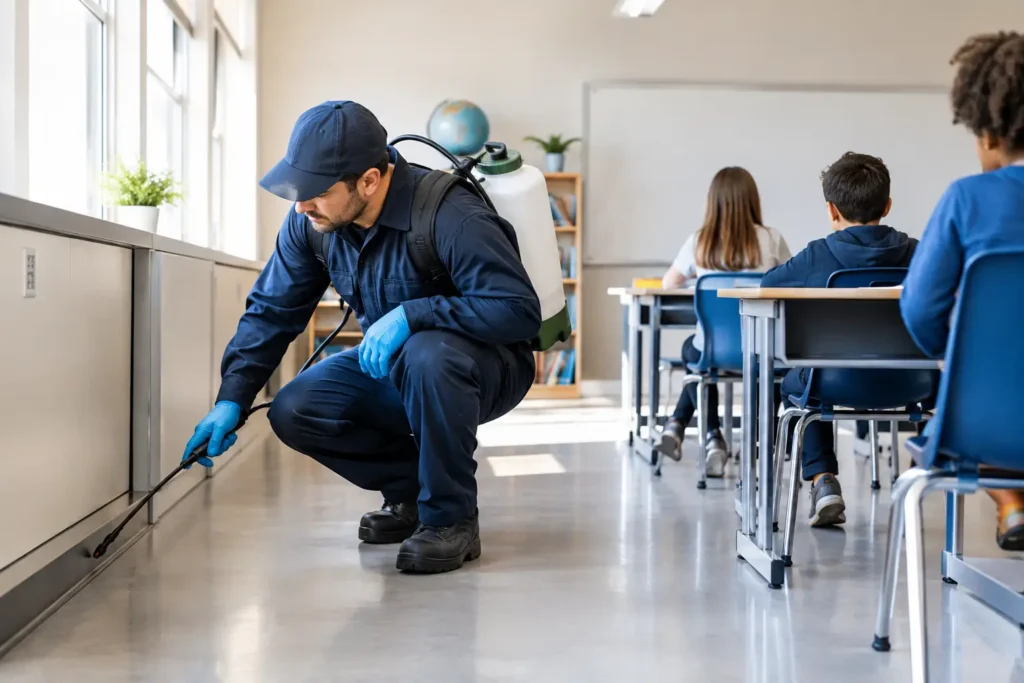
What a School Pest Control Program Should Cover
A school is not one environment. A cafeteria has food and floor drains. A gym may have locker rooms and storage areas. Classrooms contain paper, supplies, and occasional snack crumbs. Maintenance buildings, athletic fields, dumpsters, and playgrounds each bring their own pest risks. Treating every area the same can leave gaps.
A strong program begins with a detailed inspection of the campus and a plan based on how each space is used. That includes identifying current pest activity, moisture concerns, entry points, sanitation issues, and conditions that can attract pests. The goal is to solve the cause of activity, not simply make insects or rodents disappear for a few days.
For schools, routine service should address common concerns such as ants, cockroaches, spiders, rodents, wasps, mosquitoes, and occasional invaders. Depending on the property and construction, termite monitoring or protection may also be a necessary part of the plan. In the Southern Termite Belt, ignoring this risk can put school facilities and budgets at unnecessary risk.
Regular Inspections Create Early Warnings
Many pest problems are easiest to address before students or staff ever notice them. Scheduled inspections allow a trained technician to look in the places pests prefer: kitchens, utility rooms, janitorial closets, storage spaces, mechanical areas, loading zones, dumpsters, rooflines, and exterior foundations.
Inspection findings should be clearly documented and shared with the appropriate school contact. A good report does more than state that service was completed. It explains what was found, what was done, and what conditions may need attention from maintenance or custodial teams.
That documentation matters when a district needs to track recurring concerns, communicate with families, meet internal facility standards, or show that it is taking reasonable steps to protect its campus.
Prevention Is More Valuable Than Constant Treatment
The most effective pest control work often happens before treatment is needed. Small facility issues can create a big invitation for pests. A gap around a pipe, a damaged door sweep, standing water near a building, or an uncovered dumpster can support activity even when a building is otherwise clean.
A professional pest management partner can point out practical corrections, such as sealing likely rodent entry points, repairing screens, improving drainage, trimming vegetation away from structures, and keeping outdoor waste areas manageable. These recommendations give the school control over the conditions that attract pests.
Sanitation also plays a role, particularly in cafeterias, break rooms, concession areas, and classrooms where food may be present. This is not about placing blame on staff. It is about building consistent habits that make the campus less appealing to pests between service visits.
Targeted Service Supports a Safer Campus
Schools need thoughtful solutions. Treatments should be selected and applied by licensed, certified technicians who understand the property, the pest, and the importance of working around students and staff. Timing matters, too. In many cases, service can be scheduled around school hours, special events, meal service, or summer maintenance periods.
There is no one-size-fits-all answer. A small ant issue near an exterior doorway may call for a very different response than rodent activity in a food storage room or a yellowjacket nest beside a playground. Effective service is targeted, measured, and tied to the findings from inspection.
How Schools Can Respond When a Pest Is Reported
Fast response is essential, but speed should not replace communication. When a teacher, parent, student, or staff member reports a pest concern, the school should have a simple path for routing that information to facilities personnel and its pest control provider.
The report should include the location, the time activity was seen, the type of pest if known, and any relevant details, such as food nearby, a leaking fixture, or a damaged screen. A clear report saves time and helps the technician investigate the right area first.
Certain concerns deserve immediate attention. Rodent evidence in food-related areas, cockroach activity in kitchens, stinging insects near student traffic, and wildlife inside a building should be addressed promptly. The response may involve treatment, trapping, exclusion work, sanitation recommendations, or a combination of services.
Schools should also avoid the temptation to rely on random store-bought products. Uncoordinated treatments can make it harder to identify the source of activity, may not solve the problem, and can create unnecessary concerns for staff and families. A managed program provides accountability and a consistent record of what has been done.
Key Areas That Need Extra Attention
Some school locations repeatedly create pest challenges because they offer food, water, shelter, or easy access. Rather than waiting for complaints, these areas should receive regular attention:
- Cafeterias, kitchens, vending locations, and concession stands
- Dumpsters, grease areas, loading docks, and outdoor trash containers
- Locker rooms, showers, floor drains, and utility spaces with moisture
- Storage rooms, portable classrooms, maintenance buildings, and bus facilities
- Playgrounds, athletic fields, bleachers, rooflines, and exterior doors
Outdoor areas deserve the same level of planning as indoor spaces. Mosquito activity can affect recess, practices, and school events when standing water is present. Wasp and hornet nests can turn a routine walkway or playground into a safety concern. Wildlife may enter through damaged vents, open gaps, or poorly secured access points.
Choosing the Right Partner for School Pest Control
A school should expect more than a technician who arrives, sprays, and leaves. The right provider understands that a campus is a busy public environment with many stakeholders. Administrators need a responsive point of contact. Maintenance teams need useful recommendations. Staff need clear communication, and parents need confidence that concerns are being handled responsibly.
Look for a company with commercial and institutional experience, properly licensed and certified technicians, dependable scheduling, detailed service records, and the ability to handle more than one type of pest issue. A provider should also be able to respond when unexpected problems arise, whether that is a rodent concern in a kitchen, a termite question in an older building, or stinging insects discovered before a school event.
Local knowledge makes a difference. North Mississippi properties face specific weather patterns, termite pressure, and seasonal pest cycles. A family-owned provider such as 662 Pest Control brings local accountability to the work, along with the experience needed to help schools address both everyday nuisance pests and larger property-protection concerns.
Common Gaps That Let Pest Problems Return
Even regular service can be less effective when communication and prevention are missing. One common gap is treating sightings as isolated events rather than looking for patterns. If ants repeatedly appear in the same wing, there may be a moisture issue, vegetation bridge, or opening that needs correction.
Another is delaying small repairs. A loose door sweep or unsealed utility opening may seem minor, but rodents can use surprisingly small gaps to enter. Likewise, overflowing outdoor trash or persistent water around a building can continually attract pests no matter how often treatments are applied.
Finally, schools sometimes focus only on indoor pests. Exterior activity is often the source of indoor problems. Managing the perimeter, landscape conditions, waste areas, and entry points creates a stronger first line of defense.
A well-managed campus should feel welcoming to students and staff, not to pests. With regular inspections, practical prevention, responsive service, and honest communication, schools can protect learning spaces and address concerns before they grow into disruptions.