August 28, 2026
/
A squirrel can enter through a roof gap that looks too small to matter. A mouse may need only a quarter-inch opening, while raccoons can pull apart weak vent covers and damaged soffits. That is why wildlife exclusion methods explained in practical terms start with the structure itself – not simply the animal you saw. Removing wildlife without closing its access point often leads to a repeat visit from the same animal or a new one.
For North Mississippi homes and businesses, exclusion is the work of finding, closing, and reinforcing the places wildlife uses to get inside. It is a long-term protection step that helps prevent costly damage to insulation, wiring, ducts, stored goods, and building materials.
What Wildlife Exclusion Really Means
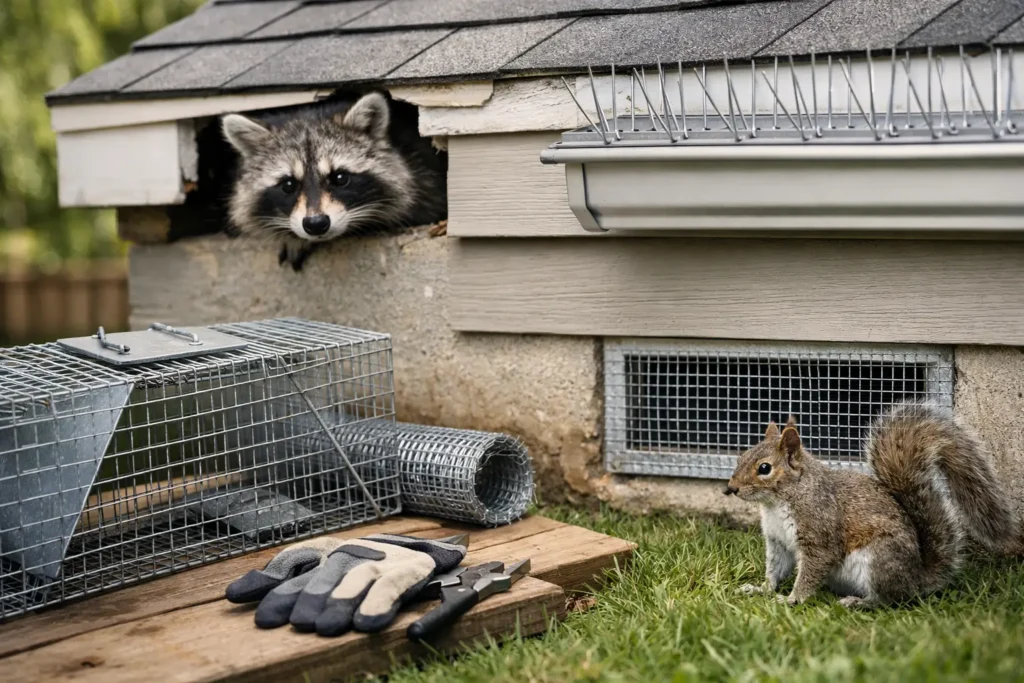
Wildlife exclusion is a prevention-focused service that keeps nuisance animals outside without creating unnecessary harm. A trained technician inspects the property, identifies active and potential entry points, determines which animal is involved, and recommends materials that can stand up to weather and chewing.
The goal is not to make a building completely airtight. Homes need properly designed ventilation, drainage, and access for maintenance. The goal is to protect those necessary openings with the right barriers while sealing gaps that should not be there.
Exclusion commonly addresses squirrels, raccoons, mice, rats, opossums, birds, and bats. Each animal behaves differently, so the right approach depends on the species, the season, the condition of the building, and whether young animals may be present.
Wildlife Exclusion Methods Explained Step by Step
Start with a complete inspection
A careful inspection is where effective exclusion begins. Wildlife signs are not always obvious from the ground. Technicians check rooflines, eaves, soffits, attic vents, ridge vents, gable vents, chimney areas, crawl spaces, utility penetrations, foundation gaps, doors, and damaged siding.
Inside, the inspection may include looking for droppings, nesting material, tracks, odors, chewed wiring, torn ductwork, disturbed insulation, and daylight visible through cracks. Outdoors, rub marks, grease trails, loose screening, claw marks, and droppings near walls can reveal regularly used entry points.
For a business, this inspection should extend beyond the main building. Loading docks, dumpster areas, storage rooms, roof access points, warehouse doors, and utility rooms can all create wildlife pressure. One overlooked opening can undermine otherwise good pest prevention practices.
Remove or evict active wildlife before sealing
Closing an opening while an animal is still inside can create a bigger problem. Trapped wildlife may damage walls, chew through another section of the structure, or die in an inaccessible area. If young animals are present, timing and removal methods become even more important.
Depending on the situation, a professional may use trapping, controlled removal, or a one-way exclusion device. A one-way device allows an animal to leave but prevents it from returning through the same opening. It is often useful for squirrels and raccoons when conditions allow.
This is not a one-size-fits-all process. Bats require special care because they are beneficial animals and may be subject to seasonal restrictions. A proper bat exclusion plan avoids trapping bats inside and considers whether young bats are able to leave on their own. Never seal a suspected bat entry point without knowing what is inside.
Seal gaps with materials matched to the problem
Once active wildlife has been removed or safely excluded, the permanent repair work can begin. The material matters. Foam alone may fill a crack, but rodents and larger wildlife can chew through it. Lightweight plastic vent covers may not withstand raccoons, squirrels, or harsh weather.
Long-lasting exclusions often use a combination of metal flashing, hardware cloth, heavy-duty screening, mortar, caulk, steel wool used appropriately within a repair, and professionally installed vent covers. The best choice depends on the location. A roofline repair needs materials that fit the structure and shed water properly, while a foundation opening may need a durable metal barrier secured against digging and chewing.
Common repair areas include:
- Gaps along soffits, fascia boards, and roof returns
- Damaged attic, gable, ridge, and crawl-space vents
- Openings around plumbing, electrical, HVAC, and cable lines
- Chimney tops without secure caps
- Cracks at foundations and gaps beneath doors
- Loose siding, broken trim, and unprotected weep holes
A quality repair should look intentional and preserve the function of the building. Covering a vent with the wrong material can restrict airflow or create moisture issues, which is why exclusion work should balance wildlife prevention with the needs of the structure.
Address the conditions attracting wildlife
Exclusion is strongest when it is paired with a few practical property adjustments. Overhanging limbs can give squirrels and raccoons a direct route to the roof. Pet food, birdseed, fallen fruit, and unsecured trash can keep animals returning to the same area. Standing water and clutter near a foundation can also create cover for rodents and other pests.
Trimming branches away from the roof, securing garbage lids, storing feed in sealed containers, and keeping crawl-space access areas clear can reduce pressure on exclusion repairs. These steps do not replace physical barriers, but they help those barriers do their job.
For commercial properties, managers may need to review receiving procedures, dumpster placement, exterior door practices, and storage conditions. A warehouse door left open during deliveries can be unavoidable, but a worn door sweep or gap beneath a side entrance is a repairable risk.
Clean up and monitor after the repair
Wildlife can leave behind contamination and damage even after it is gone. Droppings and urine may create odors, while nesting materials can harbor insects and damage insulation. Rodents can also leave chewing damage that deserves prompt attention, particularly around wires and HVAC components.
Cleanup needs vary by the animal and the level of contamination. In a lightly affected area, removal of nesting debris and sanitizing may be enough. A heavily contaminated attic may require insulation removal, odor treatment, and replacement insulation. The right response depends on what the inspection finds, not just on how long the animal was present.
Follow-up matters as well. A technician may recheck one-way devices, confirm that activity has stopped, and inspect repairs after a reasonable monitoring period. This step helps ensure the solution worked before every temporary device is removed.
Why DIY Exclusion Can Miss the Real Entry Point
Homeowners can sometimes handle simple maintenance, such as replacing a worn door sweep or keeping trash containers closed. The challenge comes when the source of the problem is high on a roof, hidden behind siding, or connected to several small gaps along a structure.
Sealing only the hole you noticed may redirect an animal to another weak spot. Using the wrong mesh size may stop a raccoon but still allow mice to enter. Repairing a roofline without confirming whether animals are still in the attic can lead to noise, odor, and additional damage inside the home.
Safety is another consideration. Attics, ladders, contaminated materials, and wildlife handling all bring real risks. Professional exclusion service provides a clearer picture of the full problem, along with repairs designed for the animal and the property.
Protecting Homes and Businesses in North Mississippi
North Mississippi weather, mature trees, crawl spaces, and changing seasons can all contribute to wildlife activity around buildings. A minor opening may become more inviting when animals are seeking shelter from heat, storms, or colder temperatures. Acting early can prevent an attic visitor from becoming a repair, sanitation, or insulation project.
At 662 Pest Control, our family-owned team combines local pest knowledge with a practical approach to wildlife removal and exclusion. A free evaluation can identify where animals are getting in, what damage may already be present, and which repairs offer the best long-term protection for your property.
If you hear scratching overhead, find droppings, notice a damaged vent, or see animals repeatedly near your roofline, treat it as an early warning. The right exclusion plan can protect the building before a small opening turns into a much larger problem.